
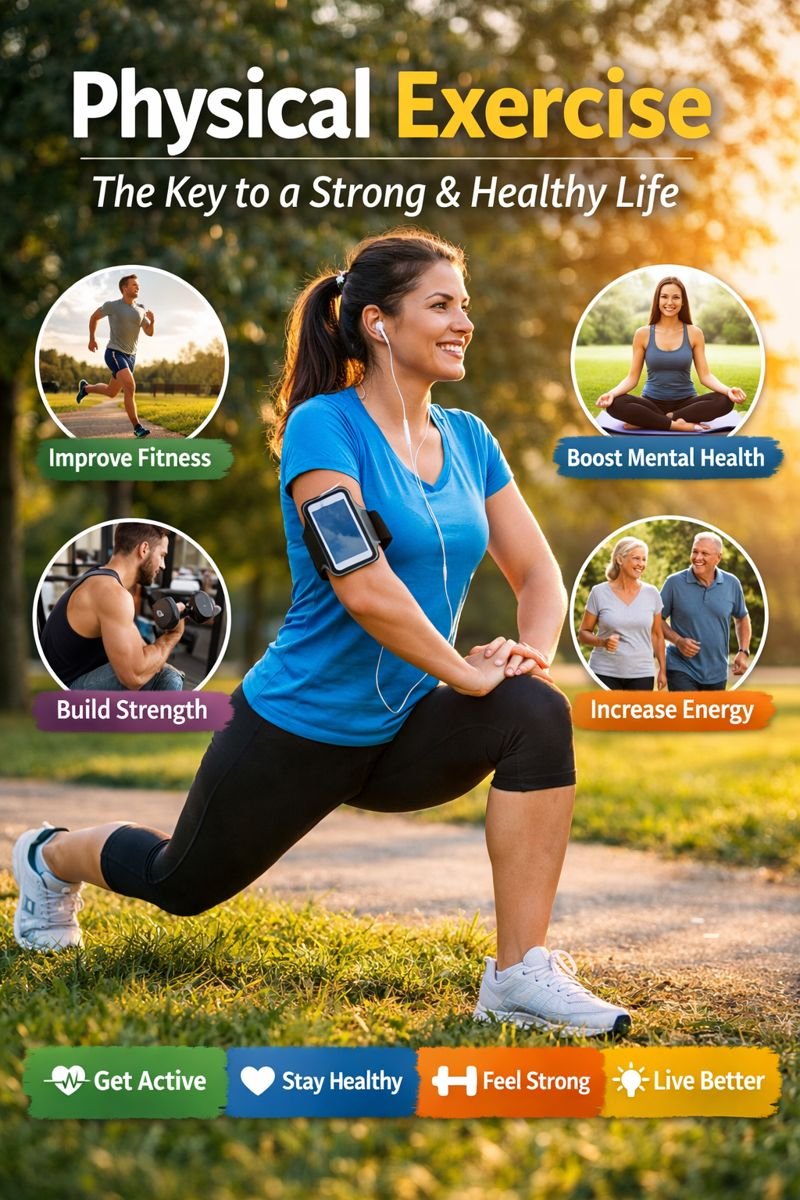
Physical Exercise: Why It Is Essential for a Healthy Life
Physical exercise plays a vital role in maintaining a healthy and active lifestyle. In today’s modern world, however, many people spend long hours sitting, whether at work or at home. As a result, physical inactivity has become a major health concern. Fortunately, regular physical exercise can help counter these negative effects and significantly improve overall well-being.
In this article, therefore, we will discuss what physical exercise is, why it is important, the different types of exercise, and how you can stay active every day.
What Is Physical Exercise?
Physical exercise refers to any planned and structured movement of the body that improves or maintains physical fitness. In other words, it includes activities that strengthen muscles, increase heart rate, improve flexibility, and boost endurance.
For example, walking, running, swimming, cycling, yoga, and strength training are all forms of physical exercise. Moreover, exercise does not always require a gym. Simple daily movements, such as climbing stairs or stretching at home, also count as physical activity.
Benefits of Physical Exercise
Physical exercise offers a wide range of benefits. Most importantly, it improves both physical and mental health. Let’s explore these benefits in more detail.
1. Improves Physical Health
First of all, regular exercise helps maintain a healthy body weight. Additionally, it reduces the risk of chronic diseases such as heart disease, diabetes, and high blood pressure. Exercise also strengthens muscles and bones; therefore, it lowers the risk of injuries and improves posture.
Furthermore, people who exercise regularly often experience better digestion and stronger immune systems. As a result, they tend to fall sick less often.
2. Supports Mental Well-Being
Not only does exercise benefit the body, but it also supports mental health. When you exercise, your body releases endorphins, which are known as “feel-good” hormones. Consequently, stress, anxiety, and depression levels decrease.
Moreover, physical activity improves sleep quality. As a result, you feel more refreshed, focused, and energetic throughout the day.
3. Increases Strength and Endurance
Over time, physical exercise builds muscle strength and endurance. Therefore, daily tasks such as lifting objects, walking long distances, or standing for long periods become easier.
In addition, improved endurance allows you to stay active for longer without feeling exhausted. This, in turn, improves productivity and confidence.
4. Enhances Brain Function
Exercise also has a positive effect on brain health. For instance, increased blood flow to the brain improves memory and concentration. Furthermore, studies suggest that regular physical activity may reduce the risk of cognitive decline as you age.
Types of Physical Exercise
To achieve balanced fitness, it is important to include different types of physical exercise in your routine. Each type serves a specific purpose.
1. Aerobic Exercise
Aerobic exercises, also known as cardio, increase heart rate and improve lung capacity. For example, brisk walking, jogging, cycling, and swimming are common aerobic activities.
As a result, these exercises improve heart health and help burn calories efficiently.
2. Strength Training
Strength training focuses on building muscle mass and strength. This includes exercises like weightlifting, push-ups, squats, and resistance band workouts.
Additionally, strength training boosts metabolism. Therefore, your body burns more calories even at rest.
3. Flexibility Exercises
Flexibility exercises help maintain joint mobility and reduce muscle stiffness. Stretching, yoga, and Pilates are excellent examples.
Moreover, improved flexibility reduces the risk of injuries and improves posture.
4. Balance Exercises
Balance exercises are especially important for older adults. Activities such as yoga and tai chi improve coordination and stability. As a result, the risk of falls is significantly reduced.
How Much Physical Exercise Is Enough?
According to health experts, adults should aim for at least 150 minutes of moderate-intensity exercise per week. Alternatively, 75 minutes of vigorous exercise can also be effective.
However, if you are new to physical activity, start slowly. For instance, begin with short sessions of 10–15 minutes. Gradually, you can increase the duration and intensity as your fitness improves.
Simple Tips to Stay Active Every Day
Staying active does not have to be complicated. In fact, small changes can make a big difference.
- First, choose stairs instead of elevators
- Next, walk or cycle for short distances
- Additionally, take short breaks to stretch during work
- Meanwhile, try morning or evening walks
- Finally, choose activities you enjoy to stay consistent
Most importantly, consistency matters more than intensity. Therefore, regular small efforts lead to long-term health benefits.
Common Mistakes to Avoid
Although exercise is beneficial, certain mistakes should be avoided. For example, skipping warm-ups can lead to injuries. Similarly, overtraining without rest may cause fatigue or muscle pain.
Therefore, always listen to your body, stay hydrated, and allow enough recovery time. If you have any medical conditions, consult a healthcare professional before starting a new routine.
Conclusion
Overall, physical exercise is essential for a healthy body and a balanced mind. Whether it is aerobic activity, strength training, or stretching, every movement contributes to better health. Therefore, by making exercise a regular part of your daily life, you can improve energy levels, reduce stress, and enhance overall quality of life.
Start today, because a healthier future begins with one simple step.
Learn more about Darmish >>here